Tracing Adaptive Feedback Loops in Virtual Competition Interfaces Through Wearable Sensor Data Integration
Paul Patterson · Jun 24, 2026
Tracing Adaptive Feedback Loops in Virtual Competition Interfaces Through Wearable Sensor Data Integration
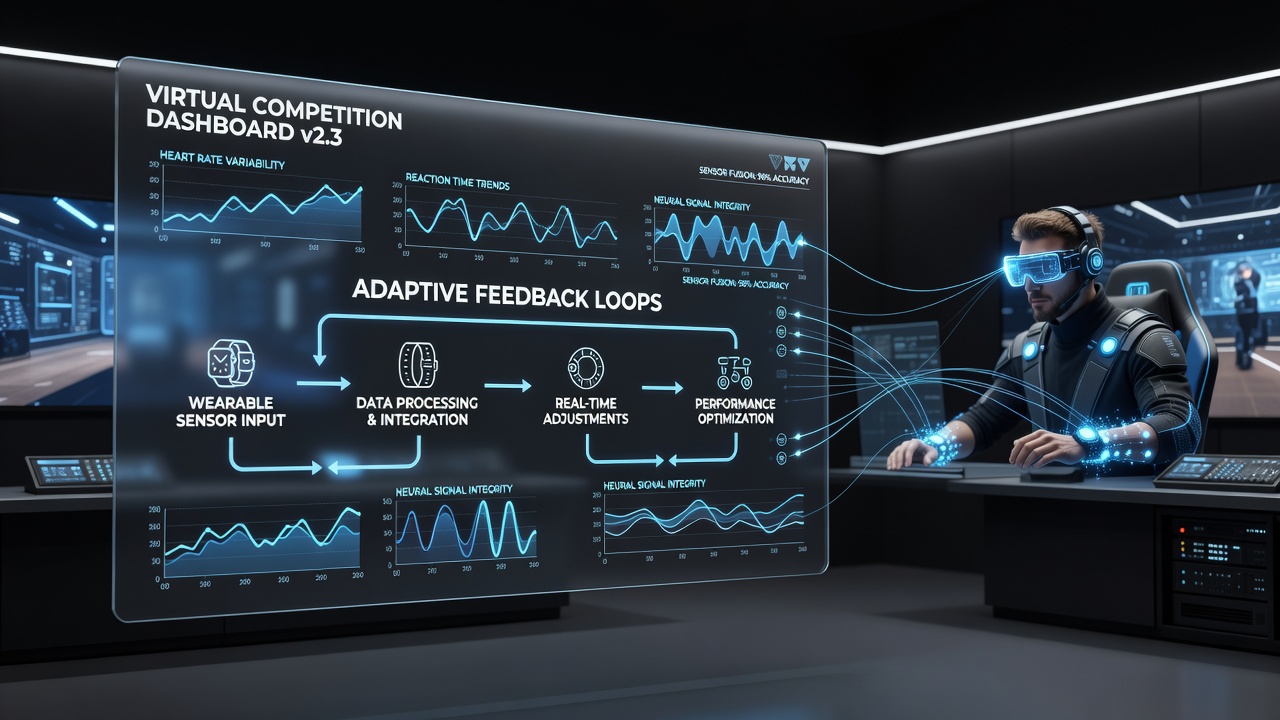
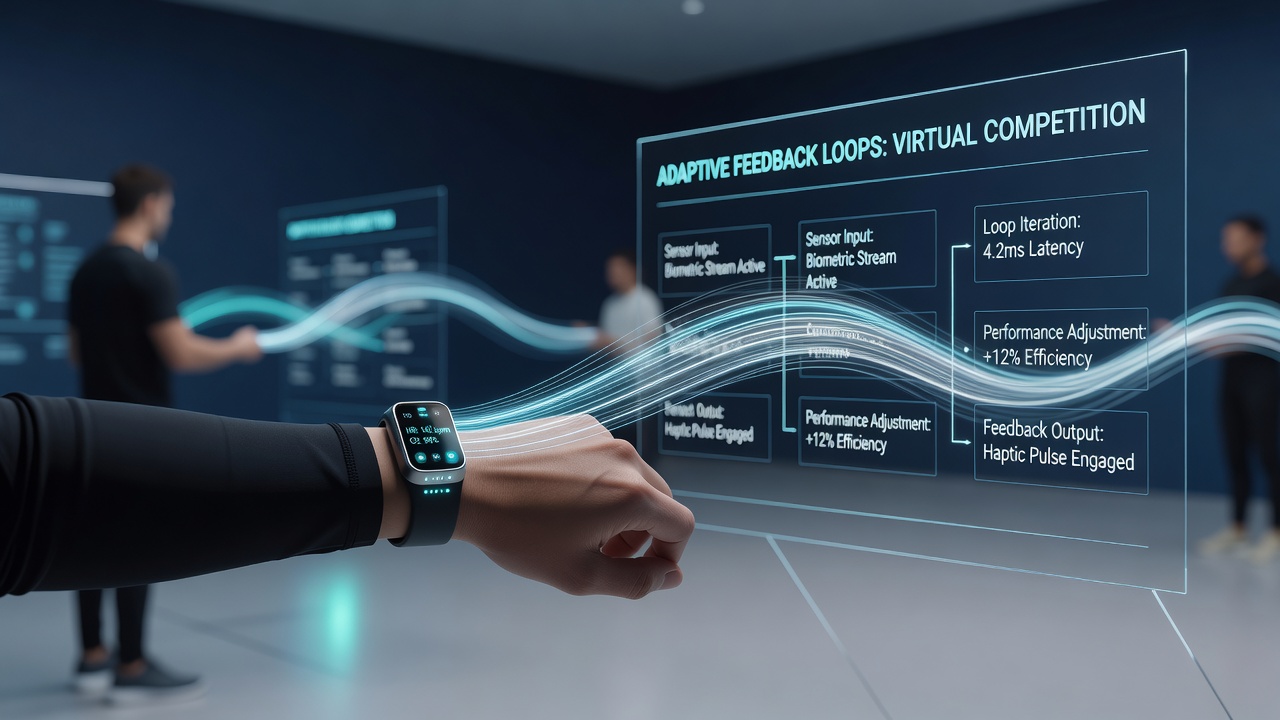
Researchers have developed systems that trace adaptive feedback loops by combining wearable sensor data with virtual competition interfaces, and these setups allow dynamic adjustments based on physiological signals during competitive sessions. Data from heart rate monitors, motion trackers, and galvanic skin response devices feed into algorithms that modify interface elements such as difficulty levels, visual cues, and audio prompts in real time. Studies from academic institutions indicate that such integration creates closed-loop systems where user performance metrics directly influence the virtual environment without manual intervention. The process begins with continuous data collection through devices worn on teh wrist, chest, or head during virtual competitions, and these sensors capture metrics including muscle activation patterns, respiratory rates, and eye movement data. Algorithms then process the incoming streams to detect deviations from baseline performance indicators, which triggers targeted changes in the interface. For instance, elevated stress signals detected mid-competition may prompt the system to simplify navigation controls or highlight key objectives on screen. This approach draws from principles in human-computer interaction research, where observers note that seamless data integration reduces latency between biometric detection and interface response.Core Components of Sensor-Driven Adaptation
Wearable technology forms the foundation of these feedback mechanisms, and current models incorporate multi-sensor arrays that transmit information via wireless protocols to centralized processing units. Motion capture from accelerometers combines with cardiovascular data to build comprehensive user profiles, while machine learning models trained on historical competition datasets refine the adaptation rules over successive sessions. Evidence from engineering reports shows that calibration periods lasting several minutes at the start of each session improve accuracy by accounting for individual physiological variations. Virtual competition platforms, ranging from immersive esports environments to simulation-based training modules, serve as the output layer where adaptations occur. Interface elements adjust through code that responds to sensor inputs, such as increasing opacity on critical display panels when fatigue indicators rise or modulating haptic feedback intensity based on engagement levels. Those who've examined prototype deployments report that these changes occur within milliseconds, maintaining immersion while supporting sustained user focus across extended events.Recent Developments in June 2026
Industry conferences held during June 2026 highlighted advancements in cross-platform compatibility for these sensor-interface systems, and developers demonstrated integrations with emerging standards for biometric data security. Participation rates in virtual competitions incorporating such technology reached new benchmarks according to aggregated platform analytics, with particular growth observed in team-based formats where collective sensor data influences shared environmental parameters. Regulatory bodies in multiple regions, including the Australian Communications and Media Authority, have begun reviewing guidelines for data handling in these contexts to ensure privacy protections align with expanded sensor use. One notable implementation involved university-led trials that linked wearable outputs to competitive scoring interfaces, and results indicated measurable improvements in participant consistency when adaptive loops operated without interruption. Figures from these trials reveal that sensor fusion techniques, which merge data from multiple device types, enhance prediction reliability for upcoming performance dips. What's interesting is how these systems differentiate between temporary fluctuations and sustained trends, allowing precise interventions that avoid over-correction.