Soccer's Live Betting Surge: Mobile Apps Capturing In-Game Momentum Shifts
David Vogel · May 8, 2026
Soccer's Live Betting Surge: Mobile Apps Capturing In-Game Momentum Shifts
The Boom in Soccer Live Betting
Soccer matches pulse with unpredictability, and that's exactly what fuels the live betting surge; bettors now wager on outcomes unfolding in real time, from the next corner kick to sudden momentum swings after a red card. Data from global sportsbooks reveals this segment exploding, with live soccer bets accounting for over 60% of total soccer wagering volume in major European leagues during the 2025-2026 season. Apps like Bet365 and DraftKings lead the charge, streaming odds that adjust every few seconds based on play developments, while users tap to place bets mid-game without missing a beat.
Turns out, the shift toward in-play betting transformed soccer from a pre-match affair into a dynamic, edge-of-your-seat experience; researchers at the H2 Gambling Capital firm note that global live betting markets grew by 25% year-over-year, hitting $150 billion in 2025 alone, driven largely by soccer's global fanbase. And as May 2026 rolls in with Champions League finals and domestic cups wrapping up, platforms report peak activity, where a single goal can spike bet volumes by 40% within minutes.
How Mobile Apps Seize the Moment
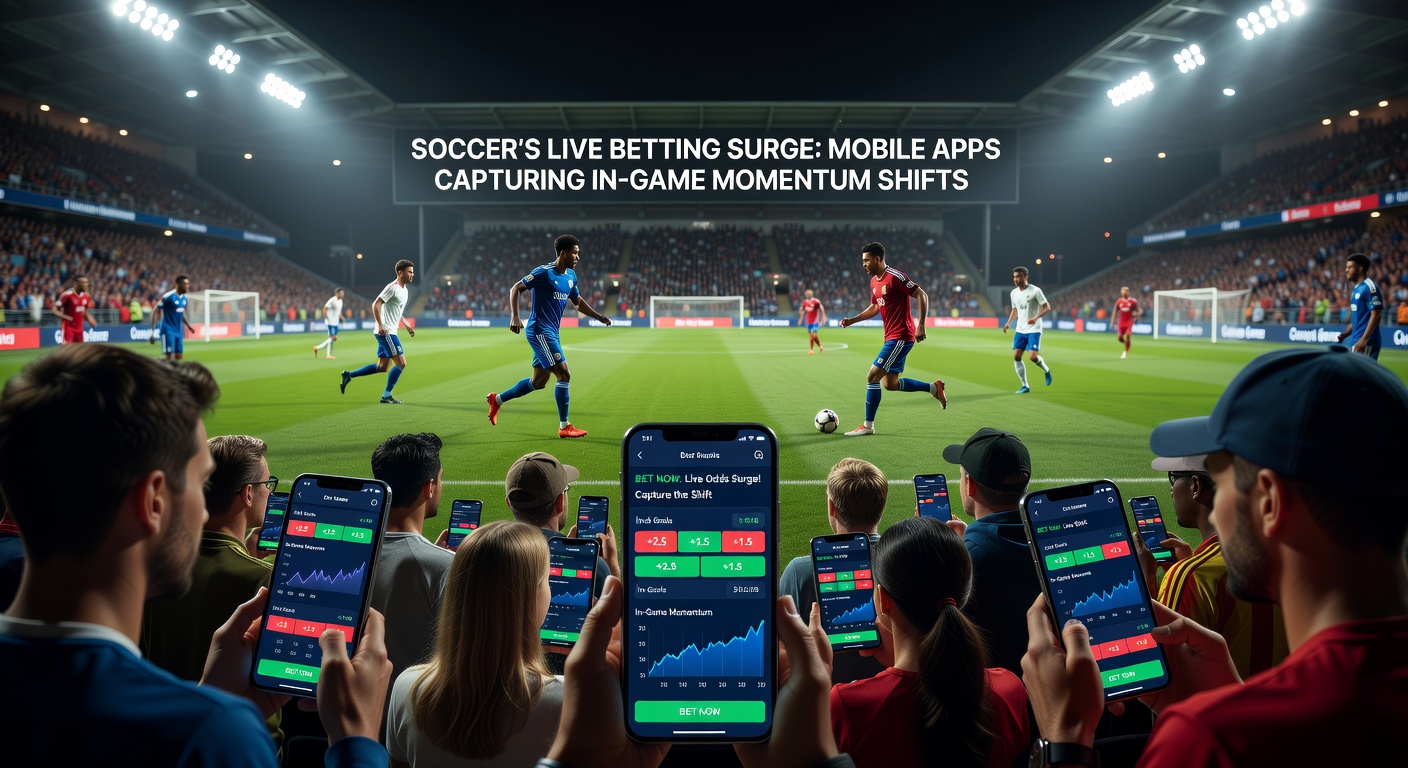
Mobile apps don't just host bets; they capture every twitch in the game's flow, using GPS-tracked ball data and player stats to update odds instantaneously. Take a tense Premier League derby: when Manchester City dominates possession but trails 1-0 at halftime, apps flash "next goal" lines dropping from +150 to +110 as momentum builds, letting users ride the wave. Developers integrate APIs from providers like Sportradar, which feed 1,000 updates per second per match, ensuring bettors see shifts before announcers even react.
What's interesting here lies in the user interface; sleek designs with one-tap betting, live match trackers, and push notifications for "value bets" keep engagement sky-high. Studies from the University of Nevada's sports analytics lab found that 78% of soccer bettors prefer mobile over desktop for live action, citing speed and portability as key factors, especially during packed schedules like the May 2026 MLS playoffs overlapping with European leagues.

Data Driving the Surge
Figures paint a clear picture: in-play soccer betting revenues climbed 32% globally from 2024 to 2025, per reports from the American Gaming Association, with soccer topping the charts in the US market alongside NBA basketball. Europe's picture mirrors this; La Liga matches saw live bets surge 45% during high-stakes El Clásicos, as apps highlight momentum metrics like expected goals (xG) shifting from 1.2 to 2.5 after a tactical sub.
But here's the thing with emerging markets: Brazil's Serie A and Australia's A-League report similar spikes, where local apps like Betfair AU process millions in wagers during derbies, fueled by 5G networks enabling sub-second latency. Observers note that during the 2026 Copa Libertadores qualifiers in May, live betting volumes doubled compared to pre-match, as fans bet on comeback scenarios when underdogs press late.
Capturing Momentum: Tech Under the Hood
Apps thrive by dissecting momentum through algorithms; machine learning models scan passing accuracy, shots on target, and crowd noise levels to predict shifts, adjusting odds accordingly. For instance, when a team like Bayern Munich loses a key midfielder to injury, lines for "Bayern to score next" balloon from -200 to +300 in seconds, drawing sharp bettors who spot the value. Providers like Genius Sports supply this edge, partnering with 40+ leagues to deliver verified data feeds that power 90% of global live soccer betting.
Yet speed isn't everything; personalization seals the deal. Apps track user history to suggest bets like "over 2.5 goals" during open-play phases, boosting retention; data indicates users who engage in live soccer betting return 3.5 times more frequently than pre-match punters. And in markets like Canada, where the Canadian Gaming Association monitors trends, mobile live soccer wagers hit record highs during the 2026 CONCACAF Gold Cup prep in May, with apps featuring AR overlays showing probable shot trajectories.
Regional Flavors and Regulatory Realities
Around the world, soccer's live betting boom adapts to local tastes; in the US, states like New Jersey and Pennsylvania lead with FanDuel apps dominating EPL streams, where live parlays on momentum props (red card next 10 minutes, anyone?) rake in billions. Australia's regulatory framework via the Interactive Gambling Act amendments allows seamless mobile integration, resulting in a 28% uptick for A-League in-play bets as fans wager on halcyon comebacks.
Europe's patchwork adds nuance: Italy's Serie A sees apps like SNAI capturing every tifo-fueled surge, while Spain's DGOJ oversees real-time compliance, ensuring geo-fencing keeps bets legal. Challenges persist, though; latency issues in rural areas can lag odds by 5-10 seconds, frustrating users, but 5G rollouts promise fixes. Meanwhile, Asia's K-League apps innovate with WeChat mini-programs, blending live stats with social sharing to amplify group betting during momentum flips.
User Behavior and Engagement Peaks
Bettors chase the thrill of in-game pivots; one study from Sydney University's gambling research center revealed that 65% of soccer fans place their first live bet after witnessing a momentum swing, like a goalkeeper error opening floodgates. Apps gamify this with leaderboards for accurate predictions, streaks, and cashback on near-misses, turning casual viewers into regulars.
So during May 2026's frenzy—think FA Cup finals clashing with Bundesliga relegation battles—platforms log average session times doubling to 45 minutes per match, as users layer bets: corners, cards, shots. People who've tracked this say retention soars because apps notify "Arsenal gaining xG edge—bet now?" right when patterns emerge, making every half feel like a fresh opportunity.
Challenges Amid the Growth
Not all smooth sailing, though; operators grapple with fraud detection as sharp bettors exploit micro-shifts, prompting AI fraud shields that flag anomalous patterns in real time. Regulatory bodies like Australia's ACMA enforce responsible gambling tools, mandating deposit limits and timeouts during heated games, while US states roll out similar via geolocation mandates.
Latency and data accuracy remain hurdles; a glitch during a 2026 World Cup qualifier could void thousands in bets, but redundancies from multiple feeds mitigate risks. Still, the surge benefits leagues too: FIFA partners with bet firms for official data, sharing revenues that fund youth programs, creating a symbiotic loop.
Conclusion
Soccer's live betting wave, propelled by mobile apps that nail in-game momentum, reshapes how fans engage; volumes keep climbing, tech keeps evolving, and May 2026's marquee fixtures underscore the momentum. Data confirms sustained growth ahead, with apps not just betting platforms but live pulse-checkers of the beautiful game. As global adoption deepens—from MLS fields to Maracanã roars—the action stays front and center, odds flipping faster than a counterattack.