Regional Variations in Player Behavior Patterns During High-Stakes Digital Card Competitions
Paul Patterson · Aug 5, 2026
Regional Variations in Player Behavior Patterns During High-Stakes Digital Card Competitions
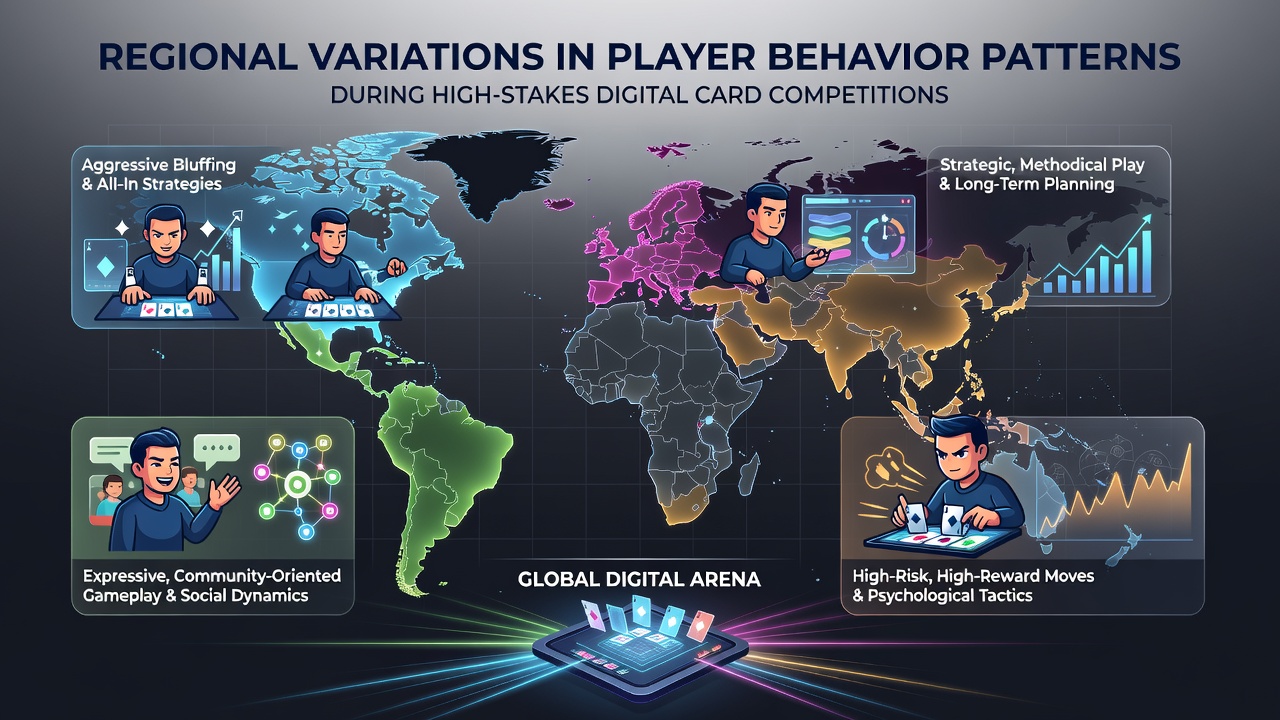
High-stakes digital card competitions reveal distinct behavioral patterns across regions, with data from major online platforms indicating measurable differences in decision speed, aggression levels, and session duration. Observers note that players in North America often exhibit quicker bet sizing adjustments during peak evening hours, while those in European markets tend toward longer deliberation periods before committing chips in tournaments exceeding $10,000 buy-ins.
North American Engagement Trends
Platforms operating under Nevada and New Jersey regulatory frameworks report that participants from the United States and Canada frequently display higher frequencies of all-in moves in the early stages of events, according to aggregated telemetry from August 2026 competitions. Research indicates these patterns align with shorter average session lengths, typically spanning 90 to 120 minutes per table, compared with extended play elsewhere. Industry reports from the National Council on Problem Gambling highlight correlations between these rapid decision cycles and increased use of real-time analytics overlays on mobile devices.
European Strategic Approaches
Competitors based in the European Union demonstrate steadier pre-flop fold rates during high-stakes no-limit hold'em series, with figures from Malta-based operators showing a preference for position-based play that extends match durations. Data collected through August 2026 events points to lower variance in raise sizing, as participants integrate more multi-way pot considerations before acting. Those tracking these tournaments observe that European players allocate greater portions of their bankrolls to satellite qualifiers, resulting in larger field sizes at the final tables.
What's interesting is how these regional styles intersect when international fields merge in global series. Australian participants, regulated under state gaming commissions, often bridge the gap by combining North American aggression with European patience, producing hybrid patterns visible in mixed-regional leaderboards.
Asian Market Dynamics
In markets across East Asia, high-stakes digital card events show elevated late-night participation spikes, with operators noting extended sessions that stretch past midnight local time. Reports compiled by academic researchers at institutions in Singapore document greater emphasis on multi-tabling strategies, where individuals manage three or more simultaneous tables during major August 2026 festivals. These behaviors coincide with higher utilization of chat functions for table talk, though regulatory bodies in the region enforce strict limits on such interactions to maintain competitive integrity.
Data Correlations and Platform Insights
Cross-regional analysis of August 2026 tournaments reveals that time-of-day preferences vary sharply, with North American users peaking between 8 PM and midnight Eastern Time while Asian cohorts sustain volume through early morning windows. A study released by the Australian Gambling Research Centre connects these timing shifts to differences in risk tolerance, measured through voluntary stop-loss settings that players activate at varying thresholds. External factors such as currency fluctuation and local tax structures further shape entry volumes, as evidenced in participation logs from licensed platforms serving multiple continents.
Regulatory Influences on Behavior
Government oversight plays a measurable role in shaping observable actions, with Canadian provincial regulators requiring detailed responsible gaming prompts that appear more frequently than in other jurisdictions. This leads to documented pauses in play among users from those areas, altering the pace of decision-making during critical hands. Similar requirements in Australian states produce comparable interruptions, though the implementation timing differs enough to create distinct rhythm variations across player pools.
Conclusion
Regional variations in player behavior during high-stakes digital card competitions continue to evolve with platform updates and regulatory adjustments, as tracked through 2026 data sets. Differences in aggression, session length, and multi-tabling frequency persist across North America, Europe, Asia, and Australia, providing clear indicators for operators and analysts monitoring these events. Continued collection of anonymized telemetry supports ongoing comparisons without reliance on subjective interpretation.