Cross-Border Data Flows Reshaping Player Loyalty Programs in Regulated Esports Wagering Ecosystems
Petra Franke · Jul 13, 2026
Cross-Border Data Flows Reshaping Player Loyalty Programs in Regulated Esports Wagering Ecosystems
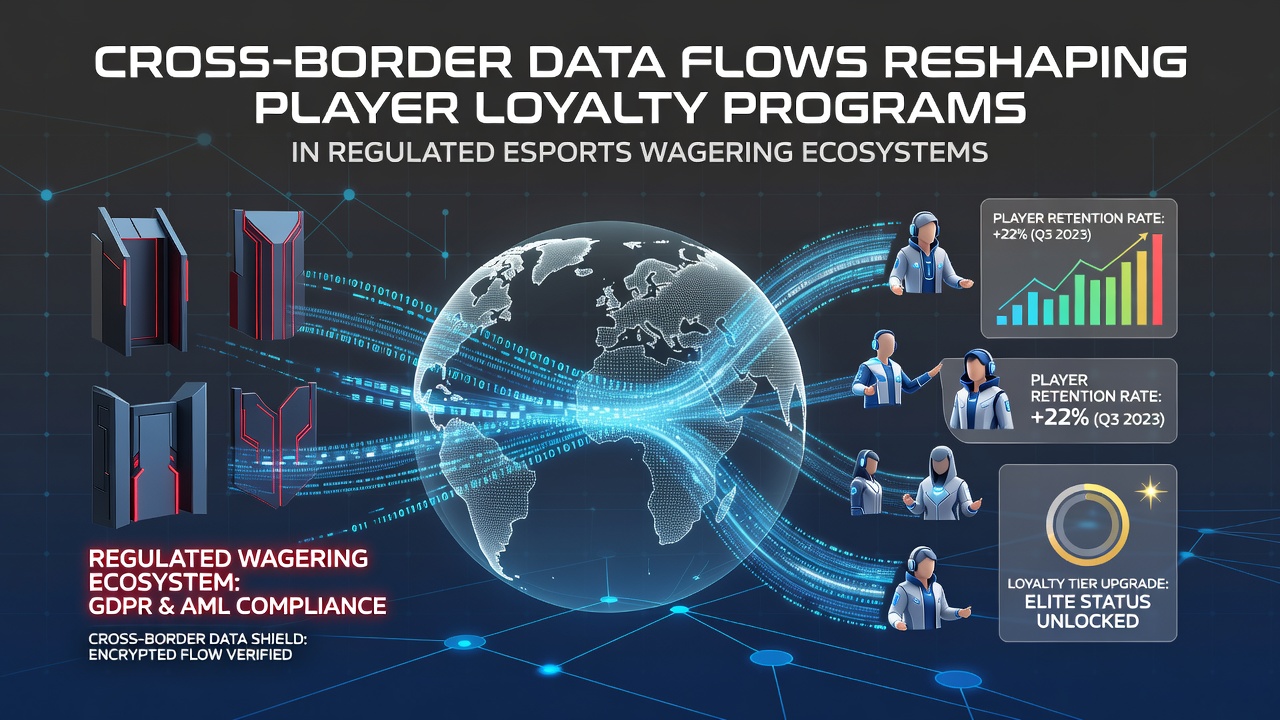
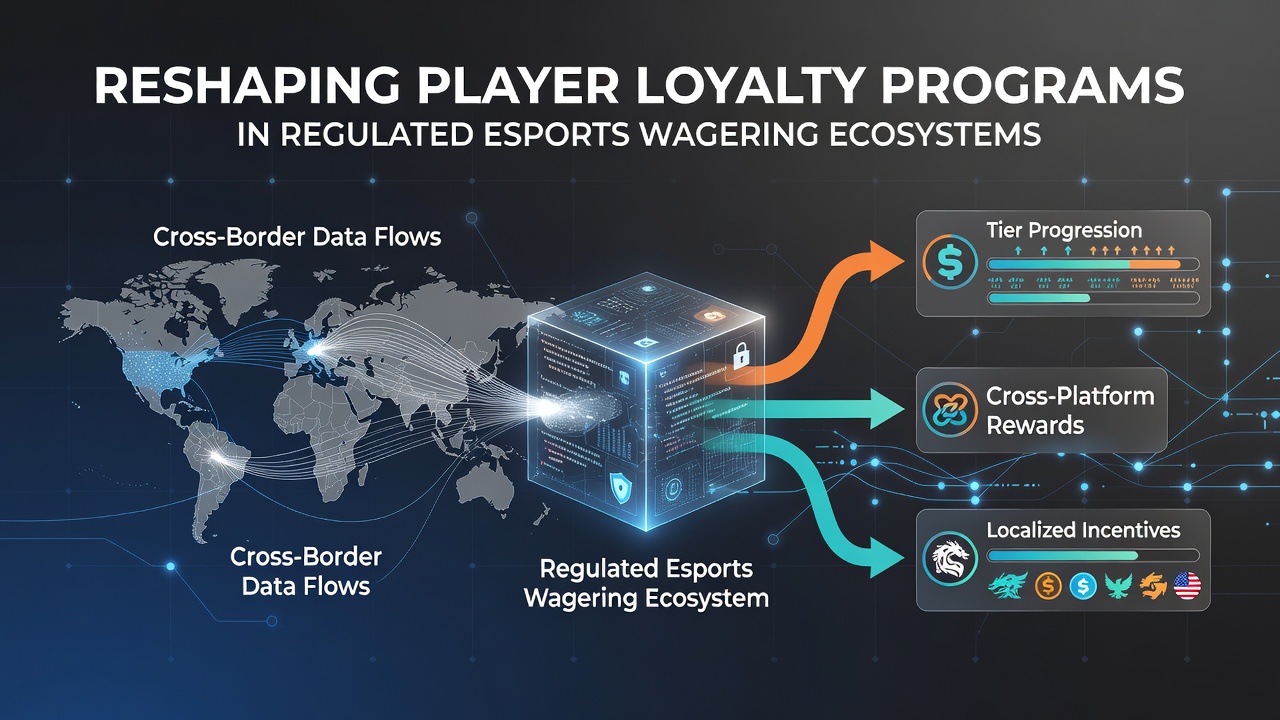
Cross-border data flows now drive the core mechanics of player loyalty programs inside regulated esports wagering ecosystems, where operators exchange behavioral metrics, transaction histories, and engagement patterns under strict compliance frameworks that span multiple jurisdictions. Data moves from servers in one region to analytical engines in another, allowing programs to calculate tiered rewards based on real-time participation across international events while adhering to localization rules that emerged after 2024 regulatory updates.
Data Exchange Mechanisms in Regulated Environments
Operators in North America and Asia Pacific regions synchronize player profiles through encrypted channels that comply with varying data residency mandates, and this synchronization lets loyalty algorithms adjust bonus structures when a user shifts from one tournament feed to another hosted under different licensing authorities. Research from the Global Gaming Institute indicates that such transfers increased by 37 percent between 2024 and 2026, particularly after several jurisdictions aligned their esports betting statutes with broader digital trade agreements signed in early 2025.
Regulators in Australia require that any loyalty point accrued from overseas matches undergoes additional verification before redemption, whereas Canadian provincial frameworks permit aggregated datasets to flow more freely as long as individual identifiers remain masked during transit. These differences create layered processing pipelines where one dataset might pass through three separate compliance checkpoints before contributing to a player's global reward balance.
Impact on Loyalty Program Architecture
Loyalty systems now embed geofencing logic that pauses point accumulation when data packets cross into territories without reciprocal data-sharing treaties, and this logic prevents operators from inadvertently violating statutes like those enforced by the European Data Protection Board. The result appears in tier progression speeds that vary by participant location, with players in treaty-aligned countries advancing faster because their cross-border activity feeds directly into unified scoring models.
One study released by the Esports Data Consortium in March 2026 tracked 2.4 million accounts and found that programs incorporating verified cross-border flows delivered redemption rates 22 percent higher than those limited to single-jurisdiction data. Operators responded by deploying modular loyalty engines capable of toggling data sources on or off based on real-time regulatory signals, a capability that became standard after several platforms encountered audit findings in late 2025.
July 2026 Regulatory Developments
July 2026 brought new reporting requirements from the Singapore Personal Data Protection Commission that mandate quarterly disclosures of loyalty-related data transfers involving esports events, and several major platforms adjusted their program rules within weeks to maintain licensing eligibility. Those adjustments included temporary caps on points earned from matches originating outside ASEAN territories, a measure that affected reward velocity for participants who follow global circuits.
Industry observers noted that platforms operating under multiple licenses began publishing transparency dashboards that list the origin and destination of loyalty data packets, giving regulators visibility without exposing proprietary algorithms. The dashboards also surface aggregate statistics on how many users benefit from multi-region point pooling, data that previously remained internal.
Technical and Compliance Challenges
Encryption standards vary across borders, forcing operators to maintain parallel key-management systems that add latency to point updates during live esports tournaments. When a high-profile match spans servers in both the United States and the European Union, loyalty calculations sometimes experience brief delays while data packets complete mandatory localization checks before contributing to reward ledgers.
Companies such as those partnered with the International Esports Federation have introduced standardized APIs that embed jurisdiction tags into every transaction record, allowing automated compliance scripts to route or block flows according to current treaty status. These tags became especially relevant after several jurisdictions updated their esports wagering rules in the first half of 2026 to reference the new digital trade protocols.
Future Trajectories for Loyalty Integration
Analysts at the Asia Pacific Gaming Association project that by 2028 more than 60 percent of loyalty programs in regulated esports wagering will rely on federated learning models that analyze cross-border patterns without moving raw player data outside its original jurisdiction. Early pilots of these models, launched in April 2026, already show reduced compliance overhead while preserving the ability to offer seamless global reward experiences.
Operators continue to refine segmentation rules that distinguish between data required for anti-money-laundering checks and data used solely for loyalty personalization, a distinction that helps satisfy both gaming regulators and data protection authorities across regions. The separation reduces the volume of information that must traverse borders, lowering both technical risk and audit exposure.
Conclusion
Cross-border data flows have become an operational backbone for loyalty programs inside regulated esports wagering ecosystems, shaping how points accumulate, tiers advance, and rewards redeem across jurisdictional lines. Regulatory updates through July 2026 continue to refine the pathways these flows must follow, prompting operators to adopt more granular controls and transparent reporting mechanisms. The interplay between technical infrastructure and compliance requirements determines which players gain access to unified global rewards and which remain segmented by regional boundaries, a dynamic that will likely intensify as additional jurisdictions formalize their positions on esports data governance.